
Why Distance Control Breaks Down Under Pressure — and How to Fix It
If you’ve ever flushed wedges on the range only to lose distance control on the course, you’re not alone.
Most golfers don’t struggle because they lack technique.
They struggle because their practice never teaches trust.
Distance control doesn’t disappear under pressure — access to it does. And that access is lost the moment conscious swing thoughts take over.
This article explains why that happens, and how a different way of training — one built around feel and implicit memory — restores confidence to your wedges, your putting, and your scoring game as a whole.
Why Distance Control Disappears on the Course
Think about a typical practice session.
Same club.
Same target.
Same swing — over and over again.
On the range, this feels productive. Balls fly close, rhythm feels good, confidence grows. But none of that prepares you for the course.
On the course, every shot is different:
- New distance
- New lie
- New target
- Consequences attached
Suddenly the “range swing” disappears.
The issue isn’t nerves.
It’s that your brain was never trained to adapt.
Repetitive practice builds familiarity, not trust. And when the environment changes, familiarity breaks down.
The Real Enemy: Conscious Control
Under pressure, golfers instinctively try to control the swing.
They:
- Think about positions
- Guide the club
- Slow things down
- “Try harder”
This feels logical — but it’s exactly backward.
Distance control is a feel-based skill, not a mechanical one. The moment you attempt to consciously control motion, you interrupt the automatic system that regulates speed and rhythm.
You don’t lose your skill under pressure.
You lose access to it.
What “Blackout Mode” Actually Means
Blackout Mode isn’t about swinging without mechanics.
It’s about training mechanics into implicit memory so they no longer require attention.
There’s a critical difference:
- Explicit training = thinking about how to move
- Implicit training = learning through feel, intention, and outcome
When mechanics are trained implicitly, the brain stores them as automatic patterns. Under pressure, those patterns remain available — because they don’t require conscious input.
Blackout Mode is the state where:
- The target is clear
- The intention is simple
- The swing happens without interference
That’s where distance control lives.
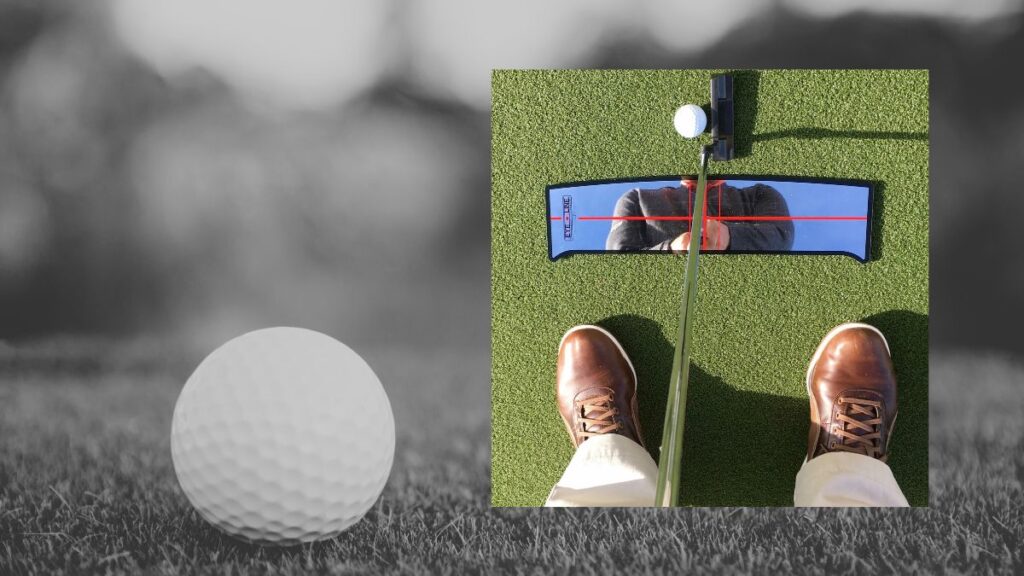
Wedges and Putting Are the Same Skill in Disguise
Most players separate wedge play and putting.
Mechanically, they’re different.
Mentally, they are identical.
Both require:
- Precise speed control
- Target-based intention
- Trust without manipulation
That’s why golfers often say:
“I can hit my lines — I just can’t control distance.”
Distance control isn’t a technique problem. It’s a decision-making and feel problem.
Train that skill once, and it transfers everywhere — from 10-foot putts to 90-yard wedges.
This is where a training program that trains distance control, changes everything.
Why Traditional Practice Fails to Build Trust
Most practice sessions fail because they remove variability.
Trust is built by:
- Changing targets
- Changing distances
- Making one clear decision per swing
- Accepting the result without adjustment
This forces the brain to:
- Calibrate speed naturally
- Learn cause and effect
- Store patterns implicitly
Repetition without intention creates dependency.
Variation with intention creates confidence.
A Smarter Way to Train Distance Control
When training focuses on:
- Feel over mechanics
- Targets over positions
- One swing per decision
Something interesting happens.
Distance starts to feel predictable.
Confidence carries from practice to play.
Pressure becomes manageable.
This approach forms the foundation of the Blackout Fairway Wedge System, the Blackout Putter System, and the complete Blackout Mode Training System — each designed to build trust where golfers need it most.
You don’t need more swing thoughts.
You need a better way to train.
Trust Is Built — Not Found
Confidence doesn’t appear on the first tee.
It’s earned in practice — not through repetition, but through the right kind of training.
When you train feel instead of control, distance stops being a mystery.
When you train trust instead of mechanics, pressure loses its grip.
That’s Blackout Mode.
1 thought on “Train Trust, Not Swing Thoughts”
Comments are closed.