
Most golfers believe improvement comes from repetition.
Hit enough wedges.
Roll enough putts.
Eventually distance control will improve.
But repetition alone rarely builds reliable distance control in golf.
Many players repeat the same shots over and over — yet their yardages still feel unpredictable when they step onto the course on game day.
Understanding how to practice distance control requires more than repetition.
It requires the right type of repetition.
The Problem With Mindless Repetition
Repetition without structure can create familiarity.
But familiarity isn’t the same as reliable performance.
Many golfers repeat wedge shots like this:
- Same club
- Same target
- Same swing
- Little feedback
The result is short-term improvement during practice.
But under pressure, distance control still disappears.
That’s because the brain hasn’t actually learned the skill deeply enough, yet.
It has simply repeated the motion.
Distance Control Is a Calibration Skill
Distance control isn’t just about mechanics.
It’s about producing predictable outcomes.
For wedges, that means:
- Specific carry yardages
- Controlled swing lengths
- Small variations in feel
For putting, it means:
- Predictable roll speed
- Consistent tempo
- Repeatable stroke length
Learning how to practice distance control means training those outcomes intentionally.
Training those outcomes you’ll see on game day.
Not simply repeating swings.
Swings you may not see on game day.
Why Implicit Memory Matters
This is where many golfers misunderstand practice.
Skills that hold up under pressure rely on implicit memory.
Implicit memory is the brain’s ability to perform movements automatically without conscious control.
When a skill becomes implicit:
- The motion feels natural (for you)
- Tempo stabilizes
- Pressure has less influence
- Execution becomes automatic
Distance control improves dramatically when practice builds implicit memory.
Without it, players rely on conscious adjustments — which often fail during competition.
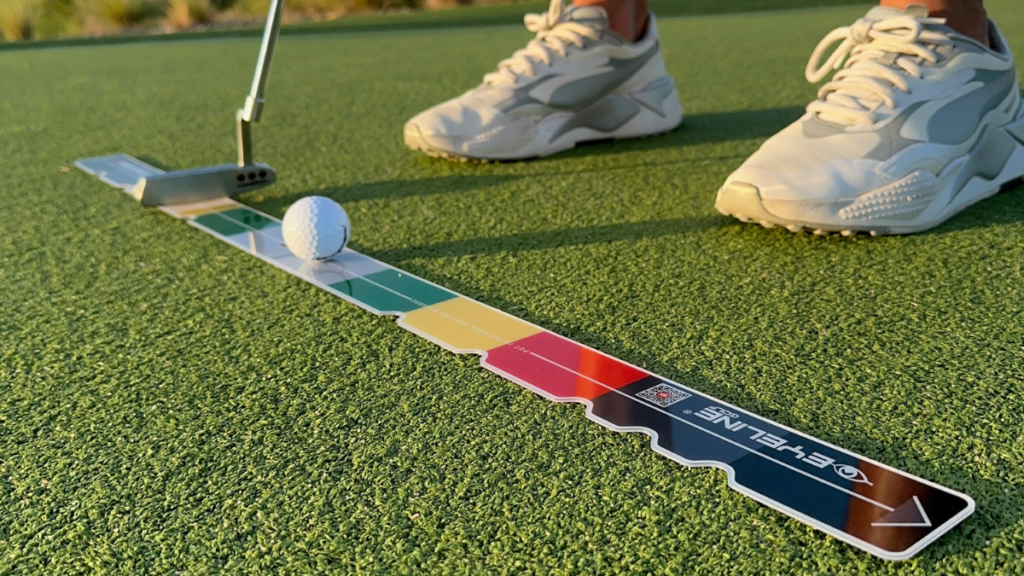
Repetition Must Have Structure
The key difference between practice and training is structure.
Structured repetition builds distance patterns the brain can store.
Effective distance control training often includes:
- Measured yardages
- Target zones instead of flags
- Incremental distance changes
- Consistent pre-shot routines
This type of repetition teaches the brain to recognize and reproduce distance.
Over time, those patterns become automatic.
This is where practice turns into training.
Why Distance Control Breaks Under Pressure
Many golfers can control distance during relaxed practice sessions.
But pressure changes things.
When players begin thinking about mechanics, tempo, or swing length, automatic execution disappears.
Implicit memory solves this problem.
When a skill has been trained deeply enough, the brain learns to perform without conscious interference.
Distance control becomes something you trust instead of something you manage.
That would be called Feel.
A Better Way to Practice Distance Control
Improving distance control requires more than hitting balls.
It requires a system that builds:
- Structured yardage calibration
- Repetition with feedback
- Feel training for partial swings
- Speed control routines for putting
This is the foundation of a
golf distance control practice system.
A system organizes repetition so the brain learns predictable outcomes.
And predictable outcomes lower scores.
The Real Goal of Distance Control Practice
The goal isn’t perfect mechanics.
It’s automatic execution.
When distance control becomes automatic:
- Wedges fly predictable yardages
- Lag putts stop closer to the hole
- Pressure has less influence
- Confidence increases
That’s when distance control begins lowering scores consistently.
There is no better feeling in golf.
If you haven’t read What Golfers Get Wrong About Practicing Distance Control, it explains why many traditional practice methods fail to transfer to the course.
Frequently Asked Questions About Practicing Distance Control
Does repetition improve distance control?
Repetition helps, but only when it is structured. Random repetition rarely produces consistent yardages or speed control.
What is implicit memory in golf?
Implicit memory allows movements to occur automatically without conscious thought. It is the type of learning that holds up best under pressure.
How do you practice distance control effectively?
Effective practice includes measured distances, consistent routines, and drills designed to train predictable outcomes rather than random shots.
Why does distance control disappear during a round?
Distance control often breaks down when players rely on conscious swing thoughts. Skills built through implicit memory remain stable under pressure.
Is distance control more important than ball striking?
Distance control directly affects proximity and putting performance, which makes it one of the fastest ways to lower scores.
2 thoughts on “Why Repetition Alone Doesn’t Build Distance Control”
Comments are closed.