
Most golfers practice distance control by aiming at the same target.
They pick a flag.
Hit a shot.
Then hit another.
And another.
It feels productive.
But it doesn’t reflect how golf is actually played.
On the course, no two shots are the same.
Learning effective distance control practice in golf requires training for that reality.
The Problem With One-Target Practice
When you hit multiple shots to the same target:
- Your body adapts to that distance
- Timing becomes predictable
- Results improve quickly
But this improvement is limited.
You’re not training distance control.
You’re training one specific distance.
Golf doesn’t reward repetition.
It rewards adaptability.
Why Every Shot Must Be Different
Distance control is not about repeating one motion.
It’s about adjusting that motion for different distances.
When you change targets every shot:
- The brain recalibrates each time
- Feel becomes more precise
- Movement becomes adaptable
Instead of relying on repetition, you begin building recognition.
“This is what 40 yards feels like.”
“This is what 65 yards feels like.”
That’s how real distance control develops.
Distance Control Is a Reaction Skill
On the course, you don’t get multiple attempts.
You see a target.
You react.
That reaction depends on trained patterns.
If practice is repetitive, that reaction is weak.
If practice is variable, that reaction becomes stronger.
This is the difference between:
- Practicing a shot
- Training a skill
What Target-Based Training Looks Like
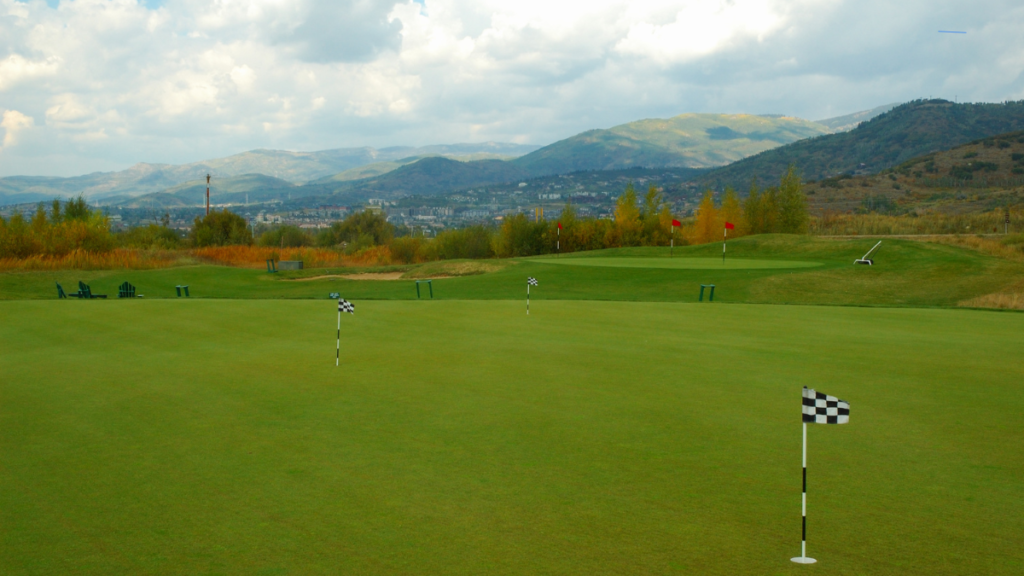
Instead of hitting the same shot repeatedly, rotate targets.
For example:
- 30 yards → 60 yards → 45 yards → 70 yards
- Different targets each time
- Pre-shot routine before every shot
Each shot becomes a new problem.
The brain is forced to:
- Identify distance
- Match movement
- Execute without repetition
This builds real adaptability.
Why This Transfers to the Course
The course constantly changes:
- Different yardages
- Different lies
- Different pressure
Target-based training mirrors that environment.
When you’ve practiced changing targets:
- Each new shot feels familiar
- Adjustments happen naturally
- Distance control becomes more reliable
You’re no longer dependent on repetition.
You’re trained for variation.
The Role of Implicit Memory
Changing targets forces the brain to store patterns.
Over time, those patterns become implicit.
You no longer think:
“How far should this go?”
You begin to feel it.
That’s when distance control becomes automatic.
A Better Way to Structure Distance Control Practice
Effective distance control practice in golf should look like this:
- Change targets every shot
- Rotate distances continuously
- Use a consistent pre-shot routine
- Focus on outcome, not mechanics
This is the foundation of a
golf distance control practice system.
A system ensures that practice builds adaptability — not dependency on repetition.
Why Most Golfers Don’t Train This Way
Because repetition feels easier.
It produces quick results.
But those results don’t hold up.
If you’ve ever practiced well but struggled on the course,
How to Practice Distance Control Without Repeating the Same Shot explains why repetition alone doesn’t transfer.
Frequently Asked Questions About Distance Control Practice in Golf
Should you aim at the same target when practicing?
No. Repeating the same target builds short-term consistency but limits adaptability. Changing targets improves real performance.
How often should you change targets in practice?
Ideally every shot. This forces the brain to recalibrate distance and improves adaptability.
Does this apply to putting?
Yes. Putting distance control improves when you practice different distances rather than repeating the same putt.
Why does changing targets improve distance control?
It trains the brain to recognize and reproduce different distances instead of relying on repetition.
Is this better than hitting multiple balls to one flag?
Yes. Changing targets better simulates real golf and leads to more reliable on-course performance.
1 thought on “Why Changing Targets Every Shot Builds Real Distance Control”
Comments are closed.