
Most golfers wait until they are on the course to “trust” a wedge shot.
That is too late.
A good wedge pre-shot routine starts long before you face a tight pin, a half wedge over a bunker, or a 70-yard shot that has to carry just the right distance. It starts at home, where there is no scorecard, no pressure, and no reason to rush.
That is where you build the foundation.
Not by grinding harder.
Not by filling your head with more swing thoughts.
But by learning how to step into a shot with a clear picture, a committed decision, and a motion you are willing to trust.
That is where Blackout Mode begins.
Why Most Golfers Struggle to Trust Their Wedges
Most seasoned players have hit enough range balls to know how a good wedge shot feels.
They have felt that one shot where the distance seemed natural.
The club moved freely.
The ball came off the face just right.
And before the ball even landed, they knew it was good.
But here is the problem.
Most golfers treat that moment like an accident.
They don’t know how to find it again.
So they go back to thinking.
They check the takeaway.
They worry about tempo.
They try to “hold off” the finish.
They wonder if the swing was too long, too short, too soft, or too quick.
And the more they think, the harder it becomes to feel the shot.
That is why wedge training has to start differently.
Before you can trust your wedge distance control on the course, you need a routine that teaches your mind how to move from thinking into playing.
Feel Is Not Something You Force
Feel is a strange thing in golf.
You cannot grab it.
You cannot muscle it.
You cannot talk yourself into it at the top of the backswing.
Feel shows up when your mind is clear enough to recognize the target and your body is free enough to respond.
That is why the goal of at-home training is not to make you perfect.
The goal is to make the routine familiar.
At home, you can rehearse the same simple process over and over without caring where the ball goes. In most cases, you do not even need to hit a ball. You are training the way you step in, commit, picture the shot, return your eyes to the ball, and pull the trigger without adding one last mechanical thought.
That is the habit.
And habits built calmly have a better chance of showing up under pressure.
Why the Pre-Shot Routine Comes First
A pre-shot routine is not just something you do before the swing.
It is the bridge between planning and playing.
Planning matters. You still have to choose the club. You still have to judge the distance. You still have to account for wind, lie, elevation, temperature, and carry number.
But planning is not performance.
At some point, you have to leave the thinking side and step into the shot.
The pre-shot routine gives you a clean way to do that.
It tells your mind:
“The decision is made. Now we play.”
That is why this comes before the deeper wedge drills.
Before you measure stock distances.
Before you build three stock fairway wedge swings.
Before you start changing speeds.
Before you test yourself with random yardages.
You need a routine that teaches commitment.
Because a good wedge swing without commitment is still a guess.
Start at Home Where There Is No Pressure
Most golfers try to build trust in the hardest environment possible.
They go to the range, rake over a ball, aim at a flag, hit the shot, judge the result, and immediately start fixing something.
That may feel like practice.
But a lot of the time, it is just reaction.
At-home training changes the setting.
There is no flag to impress.
No buddy watching.
No ball flight to judge.
No quick correction after every swing.
That gives you room to train the part of golf that most players skip: the way you prepare yourself before the club moves.
This is where the pre-shot routine becomes powerful.
You are not trying to prove anything.
You are building a repeatable process.
One calm rep at a time.
The Simple Wedge Pre-Shot Routine
This routine does not need to be complicated.
In fact, the simpler it is, the better chance it has of holding up when the shot matters.
Here is the basic structure.
Step 1: Decide and Commit to the Distance
Before you step into the shot, make a decision.
Not a vague one.
A real one.
What distance are you trying to carry the ball?
Is it 45 yards?
65 yards?
82 yards?
Are you landing it short and letting it release, or carrying it closer to the hole?
This is where you factor in the things that matter:
- Wind
- Lie
- Elevation
- Temperature
- Landing area
- How much release you expect
Then commit.
Not halfway.
Fully.
A lot of poor wedge shots happen because the golfer is still negotiating during the swing.
That cannot happen.
Once the distance is chosen, the decision is done.
Step 2: Pick the Club That Matches the Shot
The next step is choosing the club that fits the distance and shot you want to play.
This sounds obvious, but many golfers choose the club they think they are supposed to hit instead of the club that actually matches the shot.
Inside scoring distance, ego does not help you.
The ball does not care what club you think you should hit.
It only responds to the motion, strike, loft, and carry.
Pick the club that gives you the best chance to hit the shot with commitment.
That is the whole point.
Step 3: Step In With the Club First
When you step into the ball, set the clubface first.
Not your feet.
Not your shoulders.
The clubface.
Let the face aim where the shot needs to start. Then let your body build around that.
This helps keep the routine from becoming a rushed setup. It also gives your mind one clear job as you move into the shot.
Set the face.
Build the stance.
Get ready.
Simple.
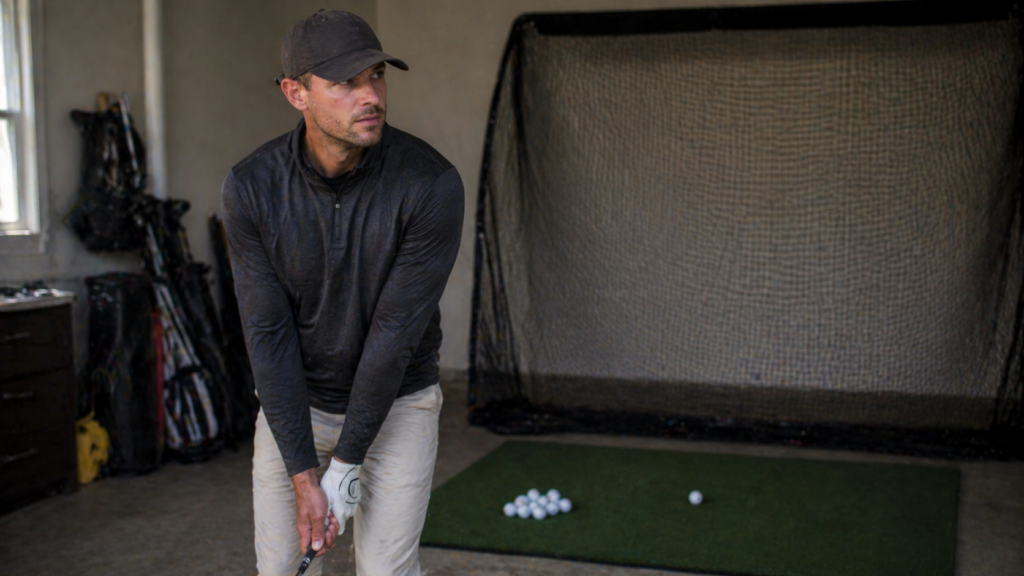
Step 4: Build the Image
This is where the routine starts to shift from thinking to feel.
Pick your target.
Then build a picture of the shot.
Not a paragraph in your head.
Not five swing keys.
A picture.
Where do you want the ball to land?
What window do you see?
What does the shot feel like?
This mental image is important because your body needs something to respond to.
If all you give it is mechanics, it will chase mechanics.
If you give it a clear picture, it has a chance to react.
That is the heart of feel-based wedge training.
See the target.
Feel the distance.
Prepare to swing.
Step 5: Return Your Eyes to the Ball
Once the image is clear, bring your eyes back to the ball.
This is a small moment, but it matters.
Many players lose the shot right here.
They look back down and sneak in one final swing thought.
“Don’t decelerate.”
“Keep your head down.”
“Don’t chunk it.”
“Take it back slow.”
That last-second thought often becomes interference.
Instead, return your eyes to the ball and feel ready.
Feel grounded.
Feel committed.
The shot has already been chosen.
The image is still fresh.
Now it is time to go.
Step 6: Pull the Trigger
This is where the routine earns its keep.
Once your eyes return to the ball, do not stand there and invite doubt.
Pull the trigger.
No extra thoughts.
No last-second fixes.
No mechanical reminders.
Just commit to the shot you already chose.
This does not mean every shot will be perfect.
That is not the goal.
The goal is to build a habit where the swing starts from trust instead of fear.
That is a completely different kind of practice.
How to Practice the Routine at Home
You can start this at home with slow, simple rehearsal.
You do not need a full range session.
You do not need a perfect setup.
You do not even need to hit a ball at first.
Here is a simple way to begin:
- Pick a pretend distance.
- Choose the club you would use.
- Step behind the ball or practice spot.
- Make the decision.
- Step in with the clubface first.
- Build the image.
- Return your eyes to the ball.
- Pull the trigger without adding a mechanical thought.
Then repeat.
But do not rush.
The point is not to make a hundred empty swings.
The point is to rehearse the same commitment pattern until it starts to feel familiar.
That is how you begin building implicit trust.
Not from pressure.
Not from grinding.
From calm repetition.
Why This Helps Wedge Distance Control
Wedge distance control is not just about knowing how far each club goes.
That matters, but it is only part of the picture.
You also need to be able to step into the shot without interfering with yourself.
A player can know the number, choose the right club, and still hit a poor shot because the mind never fully committed.
That is why the routine supports the entire training system.
It gives every future drill a foundation.
When you begin working on stock wedge swings, the routine helps you commit to each swing.
When you begin changing speeds, the routine helps you feel the distance instead of forcing the motion.
When you begin randomizing yardages, the routine helps you react to the target instead of searching for mechanics.
That is how wedge distance control practice becomes more than hitting balls.
It becomes training.
And if you want a complete structure for building distance control across your scoring shots, this is where a full golf distance control training system can help guide the process.
The Routine Is Not the Finish Line
A pre-shot routine will not fix every wedge problem by itself.
It is not magic.
It is not a shortcut.
It is the starting point.
The reason it matters is because it gives your training a shape.
Every rep now has a purpose.
You are not just making swings.
You are learning how to choose, commit, picture, and trust.
That is the skill most golfers never train.
They work on the motion.
They work on technique.
They work on contact.
But they never train the moment where thought has to become action.
That moment is where a lot of scoring shots are won or lost.
Connect This to Your On-Course Routine
Once this starts to feel comfortable at home, you can bring the same routine to the range and then to the course.
Do not change it just because you are outside.
That is the mistake many players make.
They practice one way at home, another way on the range, and another way under pressure.
Keep the same pattern.
Decide.
Commit.
Set the club.
Build the image.
Return your eyes.
Pull the trigger.
The more consistent the process becomes, the less your mind needs to search.
That is where calm starts to show up.
And calm is a big part of playing better scoring shots.
For a deeper look at how this same idea carries into your full playing routine, read this related article on how to build a pre-shot routine that eliminates overthinking.
Final Thought: Train the Moment Before the Swing
Most golfers think the swing is where the shot begins.
It is not.
The shot begins when you make the decision.
It begins when you choose the club.
It begins when you picture the landing spot.
It begins when you step in with enough commitment to let the swing happen.
That is why the wedge pre-shot routine matters.
It trains the moment before the motion.
And for many players, that is the missing piece.
Because once you learn how to step into a wedge shot with a clear mind and a committed picture, you give feel a chance to show up.
That is the beginning of Blackout Mode.
Not perfect.
Not forced.
Just trained, trusted, and free.
FAQ
What is a wedge pre-shot routine?
A wedge pre-shot routine is the repeatable process you use before hitting a wedge shot. It helps you choose the distance, commit to the club, picture the shot, and swing without adding last-second mechanical thoughts.
Why should I practice my pre-shot routine at home?
Practicing at home removes pressure. There is no score, no ball flight to judge, and no reason to rush. That makes it easier to build the habit calmly before taking it to the range or course.
Can a pre-shot routine improve wedge distance control?
Yes, because wedge distance control depends on commitment as much as technique. A routine helps you decide, commit, and react to the target instead of interfering with the swing.
Do I need to hit golf balls to practice this?
No. You can rehearse the routine without hitting balls. Start by practicing the decision, setup, target image, and trigger. Then add ball striking later.
How long should a golf pre-shot routine be?
It should be short enough to repeat under pressure. A good routine is simple, personal, and consistent. The goal is not to add steps. The goal is to help you move from thinking to trusting.
Want to Keep Training This?
This article is a starting point. The real progress comes from training it consistently.
Join The Blackout Journal Training Notes for free weekly guidance on wedge distance control, putting feel, practice plans, and building trust without overthinking every scoring shot.
1 thought on “Wedge Pre-Shot Routine: How to Build Trust Before the Shot”
Comments are closed.