
Most golfers believe better ball striking is the fastest way to lower scores.
It isn’t.
Distance control in golf lowers scores faster — and it does so at every index level.
You can strike the ball beautifully and still shoot high numbers.
But when you consistently control how far the ball travels, scores begin to stabilize quickly.
This is where most players misunderstand improvement.
Ball Striking Is Visible. Distance Control Is Measurable.
Ball striking looks impressive.
High, compressed irons.
Pure contact.
That crisp sound.
Distance control is quieter.
It shows up in:
- Proximity to the hole
- Reduced three-putts
- Manageable second putts
- Fewer short-sided misses
- More predictable dispersion
Ball striking can vary slightly and still produce good results.
Poor distance control always shows up on the scorecard.
The Real Scoring Equation
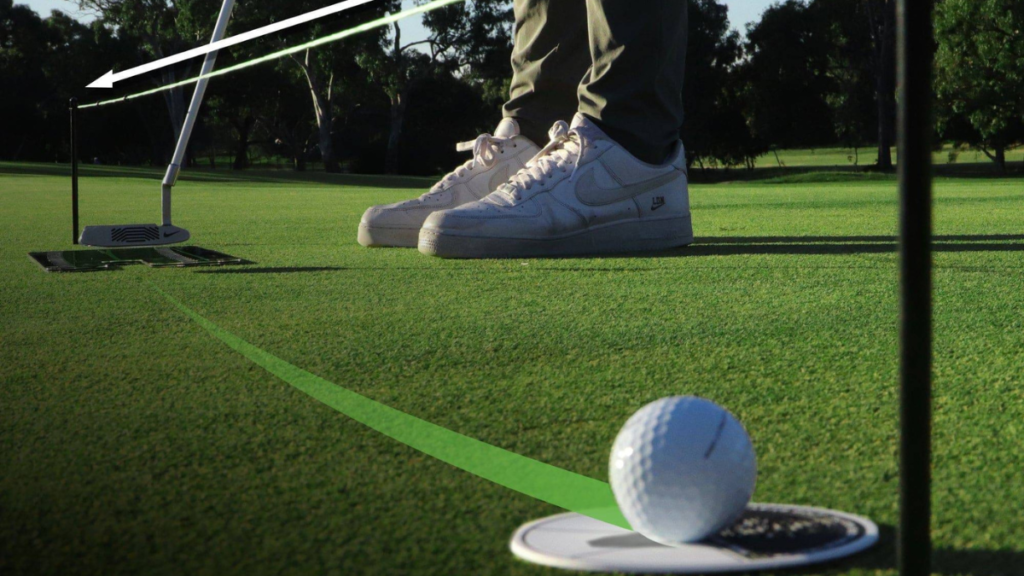
Lower scores are built on two things:
- Predictable carry yardages
- Controlled speed on the greens
That’s it.
When your half-wedge carries 86 yards instead of 94 — consistently — you remove chaos.
When your first putt stops inside 18″ instead of four feet — consistently — pressure drops.
Distance control in golf reduces variability.
And scoring is a variability game.
Why Most Golfers Focus on the Wrong Thing
Because mechanics feel productive.
You can “fix” your swing.
You can adjust your takeaway.
You can chase positions.
Distance control requires something different.
It requires:
- Structured repetition
- Feedback tracking
- Feel calibration
- A strict pre-shot routine
- Transfer from practice to performance
It’s less exciting.
But it’s more powerful.
Distance Control Builds Confidence Faster Than Perfect Contact
You don’t need perfect mechanics to score well.
You need predictable outcomes.
A slightly thin wedge that flies the correct yardage is more valuable than a perfect strike that flies 12 yards long.
A putt struck at the correct speed removes fear — even if it misses.
Confidence comes from predictability.
Predictability comes from training distance — not chasing positions.
The Missing Piece: Practice-to-Performance Transfer
Here’s where improvement often breaks down.
Many golfers can control distance on the range.
Few can transfer it to the course.
Why?
Because distance control in golf is not just technical.
It’s neurological.
Movements must move from conscious thought into implicit memory.
When that happens:
- Tempo stabilizes
- Feel sharpens
- Pressure decreases
- Execution replaces analysis
Distance control isn’t built by thinking harder.
It’s built by training differently.
The System Behind It
A true golf distance control training system doesn’t just give drills.
It builds:
- Stock carry yardages
- Incremental feel variations
- Structured wedge calibration
- Speed control modules for putting
- A consistent routine that transfers to the course
That is the foundation of the
golf distance control training system
Distance control must be trained — not hoped for.
Why This Lowers Scores Faster
Because it impacts every hole.
Distance control affects:
- Approach shots
- Partial wedges
- Lag putting
- Short putts under pressure
- Par saves
- Birdie opportunities
Ball striking affects contact.
Distance control affects scoring.
That distinction changes how you practice.
What to Focus on Next
Before chasing swing changes, ask:
- Do I know my exact carry yardages?
- Can I hit three distinct wedge distances on command?
- Can I roll a putt 30 feet that stops within 18 inches consistently?
- Does my routine remain the same under pressure?
If not, that’s the fastest place to improve.
Not mechanics.
Distance control.
Frequently Asked Questions About Distance Control in Golf
Why is distance control more important than ball striking?
Because scoring depends on proximity and speed. Even imperfect contact can score well if yardage and pace are predictable.
How do you improve distance control in golf?
Through structured yardage calibration, incremental feel training, and repetition that builds implicit memory — not by constantly adjusting mechanics.
Does distance control matter for high handicaps?
Yes. In fact, it lowers scores faster at higher handicaps because it reduces big numbers and three-putts quickly.
How does distance control transfer from practice to the course?
By training yardages and speed until they no longer require conscious management. A consistent routine then allows performance under pressure.
Is this the same as working on mechanics?
No. Mechanics are installed first. Distance control training teaches you to execute those mechanics without conscious control.