
Most golfers have experienced it.
On the range, distance control feels predictable.
Wedges fly the right yardage.
Putts stop close to the hole.
Everything feels consistent.
But on the course, it changes.
Shots come up short.
Fly long.
Lag putts roll past the hole.
Distance control under pressure begins to break down.
And it often feels confusing.
Because nothing about the swing seems drastically different.
Pressure Changes How the Brain Performs
Pressure doesn’t just affect emotions.
It changes how the brain processes movement.
Under pressure:
- Attention narrows
- Tension increases
- Conscious control takes over
Instead of trusting trained motion, golfers begin managing the swing.
They think about:
- Tempo
- Mechanics
- Contact
This shift from automatic execution to conscious control is where distance control starts to fall apart.
Why Distance Control Is Sensitive to Pressure
Distance control relies heavily on:
- Rhythm
- Tempo
- Feel
These are subtle and timing-dependent.
They cannot be precisely calculated during the swing.
When pressure increases, even small changes in tempo can create large changes in distance.
That’s why:
- Wedge shots fly inconsistent yardages
- Putts roll too far or come up short
Even with solid contact.
Distance control is one of the first skills to break under pressure.
Why Practice Doesn’t Always Transfer to the Course
Most golfers practice in low-pressure environments.
On the range:
- There are no consequences
- You can hit multiple balls
- You can adjust after every shot
This creates a different mental state than playing on the course.
During a round:
- Every shot matters
- There are consequences
- You only get one attempt
If distance control hasn’t been trained to operate automatically, performance becomes inconsistent.
The Role of Implicit Memory Under Pressure
Skills that hold up under pressure rely on implicit memory.
When distance control is stored in implicit memory:
- The brain executes movement automatically
- Tempo remains stable
- Feel is preserved
But when skills are not deeply trained:
- The brain tries to regain control
- Swing thoughts appear
- Execution becomes inconsistent
That’s why some players appear calm under pressure.
They aren’t thinking less.
They’ve trained differently.
Why Swing Thoughts Make It Worse
Under pressure, many golfers try to fix performance mid-round.
They add swing thoughts.
They try to control mechanics.
This often makes distance control worse.
Because the brain shifts from:
Automatic execution → Conscious management
And distance control depends on automatic execution.
Training Distance Control That Holds Up
To improve distance control under pressure, practice must prepare the brain for performance.
That means training:
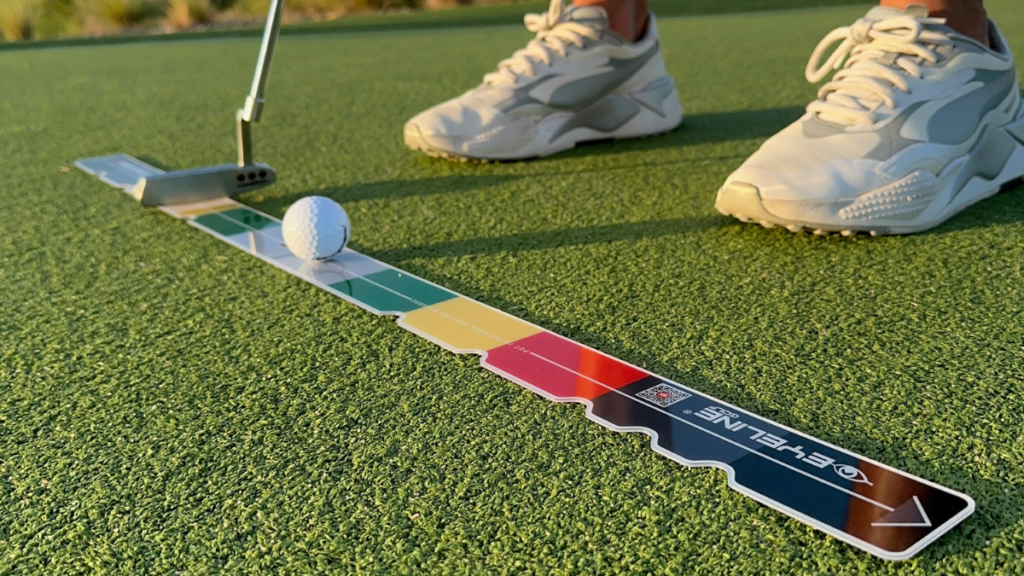
- Structured wedge yardages
- Speed control in putting
- Consistent pre-shot routines
- Repetition that builds implicit memory
Over time, this allows distance control to become automatic.
That’s the foundation of a
golf distance control practice system.
A system ensures that what you train shows up on the course.
What Changes When Distance Control Is Trained Properly
When distance control is trained effectively:
- Tempo becomes more consistent
- Wedge distances stabilize
- Putting speed improves
- Pressure has less influence
Instead of managing mechanics, the golfer focuses on the target.
Execution becomes simpler.
And performance becomes more predictable.
If you haven’t read How to Train Feel Instead of Mechanics in Your Short Game, it explains how feel-based training helps distance control hold up under pressure.
Frequently Asked Questions About Distance Control Under Pressure
Why does distance control break down under pressure?
Distance control breaks down when the brain shifts from automatic execution to conscious control. This disrupts tempo and feel.
How can golfers improve distance control under pressure?
By training distance control through structured repetition that builds implicit memory, allowing movements to remain automatic during play.
Why does my distance control feel good in practice but not on the course?
Practice environments are low-pressure and allow adjustments. On the course, pressure exposes whether the skill has been trained deeply enough.
Do swing thoughts help under pressure?
Swing thoughts often interfere with performance under pressure because they disrupt automatic movement and rhythm.
Is distance control the hardest skill under pressure?
Distance control is highly sensitive to pressure because it relies on feel and timing, which are easily disrupted by tension and conscious thought.