
The range gives you a flat lie, a full bucket, and another ball sitting there waiting. The course gives you one lie, one decision, and one chance.
That difference explains a lot.
I have stood on a range and hit a 60-yard wedge over and over until the shot felt automatic. Same lie. Same club. Same target. After a while, I knew exactly what the next ball needed before I even pulled it into place. Then I would get on the course and face what looked like the same 60-yard shot. Except it wasn’t the same because the ball was sitting a little down and the green was firm. The pin was tucked behind a bunker, plus a breeze hurting from the left.
Short was dead, long was playable, and suddenly 60 yards was not just 60 yards anymore.
That is the part normal range practice can miss. You can make technically solid swings all afternoon and still leave out some of the most important parts of playing golf. And the fact that you only get one ball changes everything.
If you want golf practice to transfer to the golf course, practice has to include more than the movement. At some point, it needs to preserve enough of the actual problem that you have to read the shot, choose an answer, and commit to it.
You do not need to turn the practice range into Augusta National. You just need to stop removing every decision golf asks you to make.
The Course Gives Information, Not Just Yardage
Seasoned players love numbers, I do too. Knowing that you have 63 yards is useful. A rangefinder can give you that number down to the yard.
But the number is only part of the shot.
- What is the lie?
- Is the ball sitting down or sitting up?
- Is the ground level?
- Is the wind helping?
- What does the landing surface look like?
- Is the green soft enough to hold the shot, or will the ball release?
- Where is the trouble?
- What miss can you live with?
Those things change the answer.
A 63-yard shot from a clean fairway lie to a soft green might call for one choice. A 63-yard shot from light rough to a firm downslope may call for something completely different. It might be the same number, but it is a different shot. That is why distance control is not simply the ability to produce a yardage.
It is the ability to take the information in front of you, decide what kind of shot that information calls for, and then produce the appropriate distance.
That decision happens before the swing and if practice removes the decision every time, you are leaving part of the skill untrained.
This is one reason golfers can become very good at hitting range targets and still feel uncertain on the course. They trained the motion and may have trained several distances. But they did not always train the process of figuring out which motion the situation required.
That process matters.
Why Convenient Practice Loses the Problem
Practice ranges are designed to make practice convenient. While that is useful, you are using flat mats, clean lies, and easy access to balls. Plus you are hitting to permanent targets and yardage markers.
The nice thing is you can get a lot of work done quickly. But the problem begins when convenience quietly removes the problem you are supposedly learning to solve.
Think about hitting ten wedges in a row to the same 60-yard target. By ball four or five, how much decision-making is left? You already know the club and the target. You have seen how the ball reacts. And now you whether the previous swing came up short or flew long.
The thing is you can make a small adjustment and hit another ball, the same golf shot.
That can produce a very clean practice session but it can also create an exaggerated feeling of readiness. On the course, there is no ball five. There is ball one and you walk into a new situation, gather the information, make a decision, and live with it.
This is why range practice can miss the real skill even when the swings themselves look good. The point is not that range practice is bad, but that convenient practice can strip away so much of the real task that you become good at a smaller version of golf.
You learn to execute an answer that has already been supplied.
Preserve the Important Information
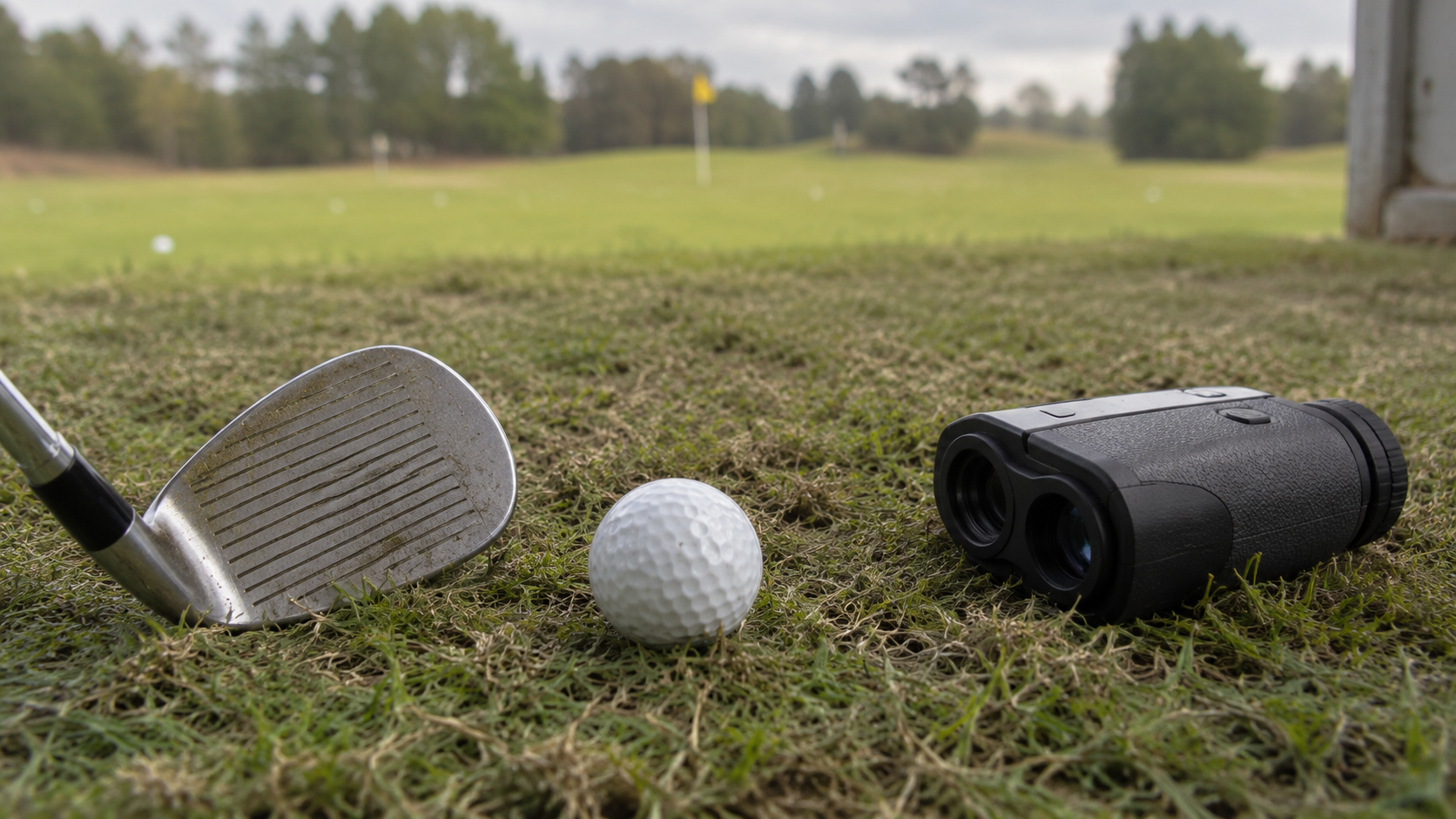
You do not have to recreate every detail of a golf course to make practice transfer better. That can become ridiculous in a hurry. I have seen seasoned players build such elaborate practice scenarios that they spend more time narrating imaginary holes than hitting shots.
Keep it simple.
Preserve the information that changes the decision. For most scoring shots, that means some combination of five things:
Target. Lie. Decision. Routine. One-ball consequence.
The target needs to mean something. Do not just fire toward the middle of a giant range green. Pick a landing area or finish zone.
The lie matters when you have access to different lies. If you are on grass, move the ball occasionally. Find a slightly tighter lie or one sitting up a little more. You do not need a buried lie every third ball. Just stop pretending every shot starts from the same perfect patch of turf.
Then make an actual decision. What club? What flight? Where does the ball need to land? How much release are you expecting? Where is the acceptable miss?
Once the decision is made, use your full routine and hit one ball, then move on.
That final piece matters.
One-ball consequence does not mean you need to punish yourself for a miss or manufacture pressure every time you practice. It simply means the first shot counts as information. You do not erase it by immediately dropping another ball and fixing it.
That is enough to make the practice more honest.
Build One Course Question Into the Range
Here is where this becomes practical. Before hitting a shot, ask one of the questions the course would force you to answer.
Where does this ball need to land?
How much will it release?
What miss can I accept?
Those are simple questions, but they change the way you approach the ball. Now you are not merely trying to reproduce a 60-yard motion, you are solving a shot. Suppose the range flag is 60 yards away. Instead of saying, “Hit this 60 yards,” create one simple situation.
- The green is firm.
- There is trouble long.
- Your safe miss is short-right.
- The ball needs to land about 55 yards and release toward the target.
Now you have a decision to make. Maybe you choose a slightly lower shot. Maybe your normal 60-yard motion is still the answer, maybe it is not. The point is not whether your imaginary golf architecture is perfectly realistic. The point is that you had to use information to make a choice before swinging.
On the next ball, change the question. Same target. Different situation. Now imagine the green is soft and there is a bunker short. The landing requirement changes, your safe miss changes, and possibly the shot changes.
That is enough.
You have restored something important that normal repetitive practice often removes.
Try the One-Shot Course Question
Use this at the end of your next wedge session. You only need three balls. Choose one range target. You can use the same physical target for all three shots because the situation around it will change. For each ball, create one simple course scenario. Do not hit practice shots for the scenario first.
One decision. One routine. One ball.
Scenario 1
Before stepping in, name four things:
- Lie: What kind of lie are you playing from?
- Carry: What carry does the shot require?
- Landing surface: Is the landing area soft, firm, level, or releasing?
- Safe miss: Where can you afford to miss?
Now choose the club and shot.
Before hitting it, predict your carry or finish zone.
Then use your full routine and play one ball.
Score the shot
Give yourself up to 3 points.
1 point — Clear decision: You committed to a specific club, shot, landing area, and safe miss before stepping in.
1 point — Prediction: The actual carry or finish falls inside the band you predicted.
1 point — Target result: The ball finishes inside your intended target or acceptable result zone.
Maximum score: 3 points.
Record it.
Do not hit a correction ball.
Create a new scenario.
Scenario 2
Change something that matters.
Maybe the landing surface is firmer. Maybe short is now the bad miss. Maybe the ball is sitting slightly down.
Go through the same process.
Read it. Choose. Predict. Routine. One ball.
Score it.
Scenario 3
Change the problem again.
You can even keep the same yardage if you want. That can be useful because it shows you how much the decision can change without the number changing.
Again, score the shot from 0–3. Across all three scenarios, the maximum score is 9 points.
Do not worry much about the total the first time. Pay more attention to what the exercise exposes.
Were you actually making a decision?
Did you know where the ball needed to land?
Did your prediction match the result?
Did you become unsure once the simple 60-yard number was no longer the entire problem?
That is the useful information.
Journal prompt
Which piece of course information changed my decision most?
Maybe it was the lie.
Maybe the landing surface.
Maybe the safe miss.
Maybe nothing changed your decision at all.
Write it down.
The purpose is to begin seeing which information you actually use when you play a shot instead of automatically reaching for the yardage and swinging.
Do Not Turn Practice Into Pretend Golf
There is one mistake I would avoid. You do not need to stand on the range announcing:
“Okay, this is the 14th hole at Pebble Beach, wind off the Pacific, pin back-right, three-shot lead…”
That is not what I mean.
You are not trying to make practice theatrical. Preserve only the information that changes the decision. If the wind matters, use it. If the lie matters, notice it. If the landing area changes the shot, define it.
If none of those things matter for the task you are training that day, leave them alone.
Practice still needs clarity. The goal is not maximum complexity. The goal is enough realism that you have to perceive something, make a choice, and then hit the shot.
That is a much cleaner way to make range work more representative of golf.
Transfer Is Confirmed on the Course
Eventually, there is only one place where you find out whether practice transferred.
The course.
That does not mean the round becomes a final exam. I would not treat it that way. A round can give you useful information if you stop trying to repair every miss while you are playing.
Suppose you have a 67-yard wedge.
You read the lie, choose the landing point, decide on the shot, make the rehearsal, and hit it ten yards short. Of course you care about the result. But the round can tell you more than “bad shot.”
Was the decision clear?
Did you predict the carry correctly?
Did you misread the lie?
Did the wind change the shot more than you expected?
Did you choose the wrong landing point?
Or did you make the right decision and simply execute poorly?
Those are different answers. Do not automatically turn all of them into a swing fix. That is where golfers start rebuilding motions in the middle of a round. Take the information and play the next shot. Afterward, use what happened to guide the next training session. That is what I mean when I say the course is a data source.
It shows you what survived and what disappeared. It shows you whether your distance-control decisions are becoming easier when the setting changes.
Over time, look for three things.
Does the skill return after time away from practice?
Can you adapt on the first ball when the situation changes?
Are your decisions getting better on the course?
Those are much stronger signs of transfer than whether you hit ten good wedges in a row Tuesday afternoon.
Every Practice Session Needs One Real Question
You do not have to rebuild the way you practice overnight.
Keep your calibration work and your stock-distance work. Keep the repetition you actually need. Then add one small section where the answer is not already waiting for you.
Just one target. One situation. One decision. One ball.
Then ask the kind of questions golf asks.
Where must this land?
How will it release?
What miss is acceptable?
Then commit to your answer and see what happens.
That small change makes practice more useful because it puts perception and decision-making back beside the swing.
And that is where they belong.
Golf is not played by producing yardages in isolation. It is played by looking at a changing situation, figuring out what the shot requires, and trusting yourself enough to hit it.
Practice the movement.
But do not forget to practice the golf shot.
Frequently Asked Questions
Why does range practice not transfer to the course?
Normal range practice often removes much of the information and decision-making present on the course. The lie stays the same, the target stays the same, another ball is immediately available, and there is little consequence to the first attempt. Better transfer comes from occasionally restoring changing information, shot selection, prediction, a full routine, and one-ball outcomes.
How can I simulate the course at the range?
Keep it simple. Use one-ball scenarios with changing targets or shot requirements. Change lies when the practice area allows it, choose a club before stepping in, predict the carry or finish zone, use your full routine, and score the first result. You do not need to recreate an entire hole.
Does practice need pressure to transfer?
Not necessarily. Start by preserving the information and decisions that matter. The golfer first needs to practice reading the situation, choosing an answer, and executing it. Pressure can be added progressively later rather than being forced into every session.
How do I know if practice transferred?
Look beyond how well you hit the ball during the session. Better evidence includes remembering the skill after a delay, adapting on the first ball when the situation changes, and making clearer distance-control decisions during actual rounds.
Train Differently
The range will always make golf a little easier.
That is fine. It is supposed to give you a place to work.
Just do not let convenience remove the whole problem.
Get the number.
Read the lie.
See the landing area.
Know the safe miss.
Make the decision.
Then give yourself one ball.
That is a little closer to the game you are actually preparing to play.
Scott | Distance Control Coach
Train Trust. Not Swing Thoughts.
Join The Blackout Journal free for weekly Training Notes on moving trained distance control onto the course—calm, practical work for seasoned golfers who want their range work to survive the first real shot.